Anno Urbis - The Roman Empire Online

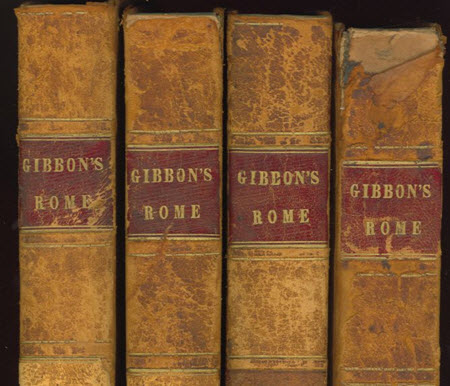
Gibbon's The Decline And Fall Of The Roman Empire

Home | Prev | Next | Contents

Volume 1 - Volume 2 - Volume 3 - Volume 4 - Volume 5 - Volume 6 -
Roman Empire


History Of The Decline And Fall Of The Roman Empire

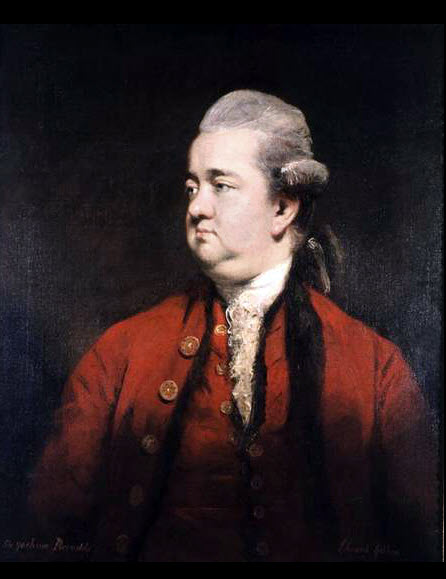
Edward Gibbon, Esq.

With notes by the Rev. H. H. Milman

Vol. 1

1782 (Written), 1845 (Revised)

Introduction

Preface By The Editor.

The great work of Gibbon is indispensable to the student of history. The literature of Europe offers no substitute for "The Decline and Fall of the Roman Empire." It has obtained undisputed possession, as rightful occupant, of the vast period which it comprehends. However some subjects, which it embraces, may have undergone more complete investigation, on the general view of the whole period, this history is the sole undisputed authority to which all defer, and from which few appeal to the original writers, or to more modern compilers. The inherent interest of the subject, the inexhaustible labor employed upon it; the immense condensation of matter; the luminous arrangement; the general accuracy; the style, which, however monotonous from its uniform stateliness, and sometimes wearisome from its elaborate art., is throughout vigorous, animated, often picturesque always commands attention, always conveys its meaning with emphatic energy, describes with singular breadth and fidelity, and generalizes with unrivalled felicity of expression; all these high qualifications have secured, and seem likely to secure, its permanent place in historic literature.

This vast design of Gibbon, the magnificent whole into which he has cast the decay and ruin of the ancient civilization, the formation and birth of the new order of things, will of itself, independent of the laborious execution of his immense plan, render "The Decline and Fall of the Roman Empire" an unapproachable subject to the future historian:* in the eloquent language of his recent French editor, M. Guizot: --

"The gradual decline of the most extraordinary dominion which has ever invaded and oppressed the world; the fall of that immense empire, erected on the ruins of so many kingdoms, republics, and states both barbarous and civilized; and forming in its turn, by its dismemberment, a multitude of states, republics, and kingdoms; the annihilation of the religion of Greece and Rome; the birth and the progress of the two new religions which have shared the most beautiful regions of the earth; the decrepitude of the ancient world, the spectacle of its expiring glory and degenerate manners; the infancy of the modern world, the picture of its first progress, of the new direction given to the mind and character of man -- such a subject must necessarily fix the attention and excite the interest of men, who cannot behold with indifference those memorable epochs, during which, in the fine language of Corneille --

'Un grand destin commence, un grand destin s'achève.'"

This extent and harmony of design is unquestionably that which distinguishes the work of Gibbon from all other great historical compositions. He has first bridged the abyss between ancient and modern times, and connected together the two great worlds of history.

Table of Contents

Volume 1
Volume 2
Volume 3
Volume 4
Volume 5
Volume 6


Prev | Next | Contents


12 Byzantine Rulers: Part 4 - Constantine - Part 2
Constantine has achieved supreme power and made one of the most momentous decisions in history, that of founding a new capital and rescuing a faith seemingly on the brink of schism. However, his megalomania undid most of his work unifying the church and threatened the very stability of the state. Does such a man truly deserve to be called great? Join Lars Brownworth as he looks at the apogee of Constantine's career and his impact on history.

The Hun - Scourge of God
Review by forum member "Caldrail""The Scourges of Gods Fury" - So named by Bishop Isidore of Seville in the 7th century, the Huns gained a fearsome reputation as merciless invaders that survives in popular culture to this day. They are described as "Repulsively ugly, their hideous faces scarred by gashes ...

12 Byzantine Rulers: Part 17 - Conclusion
With the death of Constantine XI, the Byzantine Empire drew to a close. But that was not the end of the story. From the Orthodox Church, to the Russian Empire, their spirit survived, and offers enduring lessons for the modern world. Join Lars Brownworth as he looks at their immense legacy, and reflects on why Byzantine History matters.

The Last Days of the Emperor Otho
The following is an account of the last days of the Emperor Otho, as told by the Roman historian C. Cornelius Tacitus:

"Otho, in the mean time, having taken his resolution, waited, without trepidation, for an account of the event. First, rumours of a melancholy character reached his ears; soon after, fugitives, who escaped from the field, brought sure intelligence that all was lost. The fervor of the soldiers staid not for the voice of the emperor; they bade him summon up his best resolution: there were forces still in reserve and in their prince's cause they were ready to suffer and and dare the utmost."

But the Emperor declined their offer. He stated "To expose to further perils such spriit and such virtue as you now display, would, I deem, be paying too costly a price for my life."

In the morning the Emperor committed suicide by falling on his sword. He was borne to his funeral on the soldiers of the praetorian guard, and his soldiers kissed his hands and his wounds amidst tears and praises. Some of the soldiers slew themselves and threw themselves on the funeral pile. The Emperor was 37 years old when he died.


Caligula
The Roman historian and lawyer Suetonius wrote a biography of the mad Emperor Caligula. Even as a young man, Caligula was cruel and vainglorious. His character was evident during a campaign against the Britons.
On arriving at the camp. in order to show himself an active general and severe disciplinarian, he cashiered the lieutenants who came up late with the auxiliary forces from different quarters. In reviewing the army, he deprived of their companies most of the centurions of the first rank, who had now served their legal time in the wars, and some whose time would have expired in a few days, alleging against them their age and infirmity; and railing at the covetous disposition of the rest of them, he reduced the bounty due to those who had served out their time ... Though he only received the submission of Adminius, the son of Cunobeline, a British king, who being driven from his native country by his fatherm came over to him with a small body of troops, yet, as if the whole island had been surrendered to him, he dispatched magnificent letters to Rome, ordering bearers to proceed in their carriages directly up to the forum and the Sentate-house, and not to deliver the letters but to the consuls in the temple of Mars, and in the presence of a full assembly of senators.


Gibbon's The Decline and Fall of the Roman Empire is one of the greatest texts in the English language. In magisterial prose, Gibbon charts the gradual collapse of the Roman rule form Augustus (23 BC - AD 14) to the first of the barbarian kings, Odoacer (476- 490 AD). It is a remarkable account, with the extravagant corruption and depravity of emperors such as Commodus, Caracalla, and Elagabalus contrasted by the towering work of Constantine, Julian, and other remarkable men. It remains the standard work of scholarship on the subject two hundred years after it is written; yet equally important, in its sheer accessibility, it is an unforgettable story. Now you don't have to read this massive book - download it in audio book format now and listen to it in your spare time or while you commute!


Google
 
Web annourbis.com


Links: MovieAce.com -  Shakespeare-1.com -  AudioBookList.com -  Encyclopedia-1.com -  BookUpdate.com -  Book-Lover.com